
What Makes Industrial Epoxy Floors Unique?
A factory or warehouse floor must do more than look finished. People, equipment, and materials move across it repeatedly, while cleaning and occasional spills add demands of their own. The right surface depends on those activities and on the condition of the concrete beneath it. Industrial epoxy coatings are distinctive because their materials, thickness, preparation, and finish can be planned around the way a particular facility operates.
That planning begins before any coating is applied.
Industrial epoxy floors are built as systems, with each stage affecting how the completed surface performs. Understanding those stages helps facility managers ask useful questions about the flooring they need without treating every industrial space as though it faces the same conditions.
Designed Around Heavy Daily Use
Traffic in an industrial facility is rarely uniform. Some areas carry regular foot traffic, while others see carts, equipment, or vehicles following repeated routes. A floor near a production area may also encounter dropped tools, abrasion, or contact with substances used in daily work. These conditions help determine which coating system and finish are appropriate for the concrete.
A warehouse aisle, for example, may experience concentrated movement that a quieter storage area does not. An assessment of traffic patterns helps identify where wear is likely to be greatest and what the proposed coating must withstand. Industrial epoxy floors can then be specified for the activities taking place on them, with appearance considered alongside those working demands.
Built as a Coating System
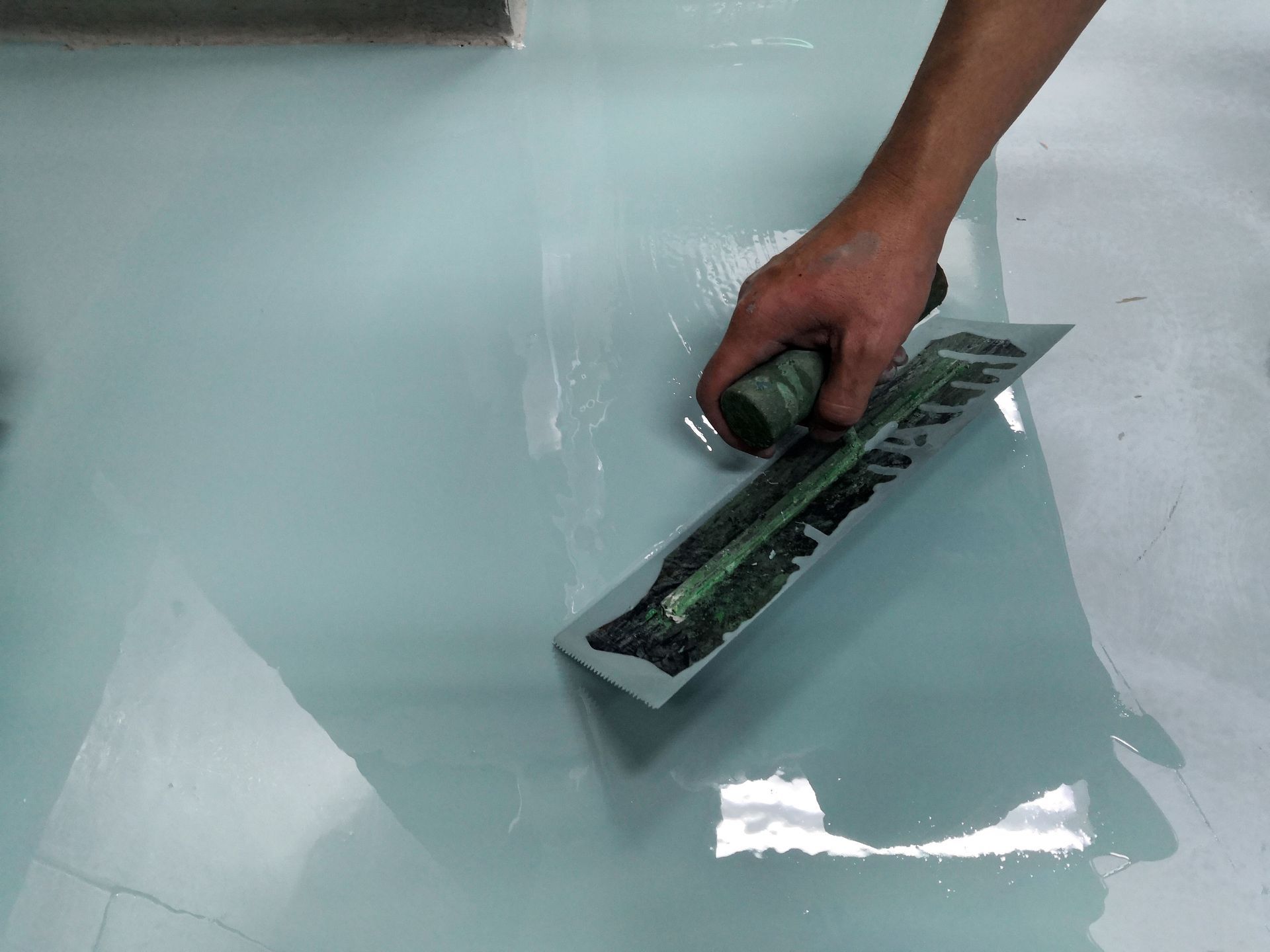
An industrial floor is more than a layer of color rolled onto concrete. Depending on the facility, the system may include a primer, multiple epoxy build coats, and a selected topcoat. Each stage has a purpose: establishing a sound bond, building the chosen surface, or providing a finish suited to the space. The layers also need the appropriate time to cure before the next stage proceeds.
According to HomeAdvisor, epoxy used for commercial and industrial applications calls for a 100% solids coating. For industrial epoxy floors, the formulation matters when discussing the build coats that form the working surface; products labeled epoxy are not all interchangeable. A facility still needs a system selected for its actual conditions, whether that calls for a thinner coating or a thicker, self-leveling application. Material choice and application method work together.
A thicker, self-leveling application can create a particularly smooth surface where that finish suits the facility. Elsewhere, the topcoat may be chosen for traction or another specific need. Asking what each layer contributes under the expected traffic and exposure makes the choice more useful than judging the finished floor by appearance alone.
Dependent on Concrete Preparation
Even a carefully chosen coating needs a suitable surface beneath it. An on-site assessment can identify existing coatings, cracks, holes, contaminants, and moisture concerns before work begins. Those findings shape the preparation plan rather than becoming surprises after the epoxy is applied. Identifying a moisture concern early also gives the installer a chance to address it when selecting the system and planning the surface work. The condition of the concrete is therefore part of the flooring decision, not a separate issue to consider later.
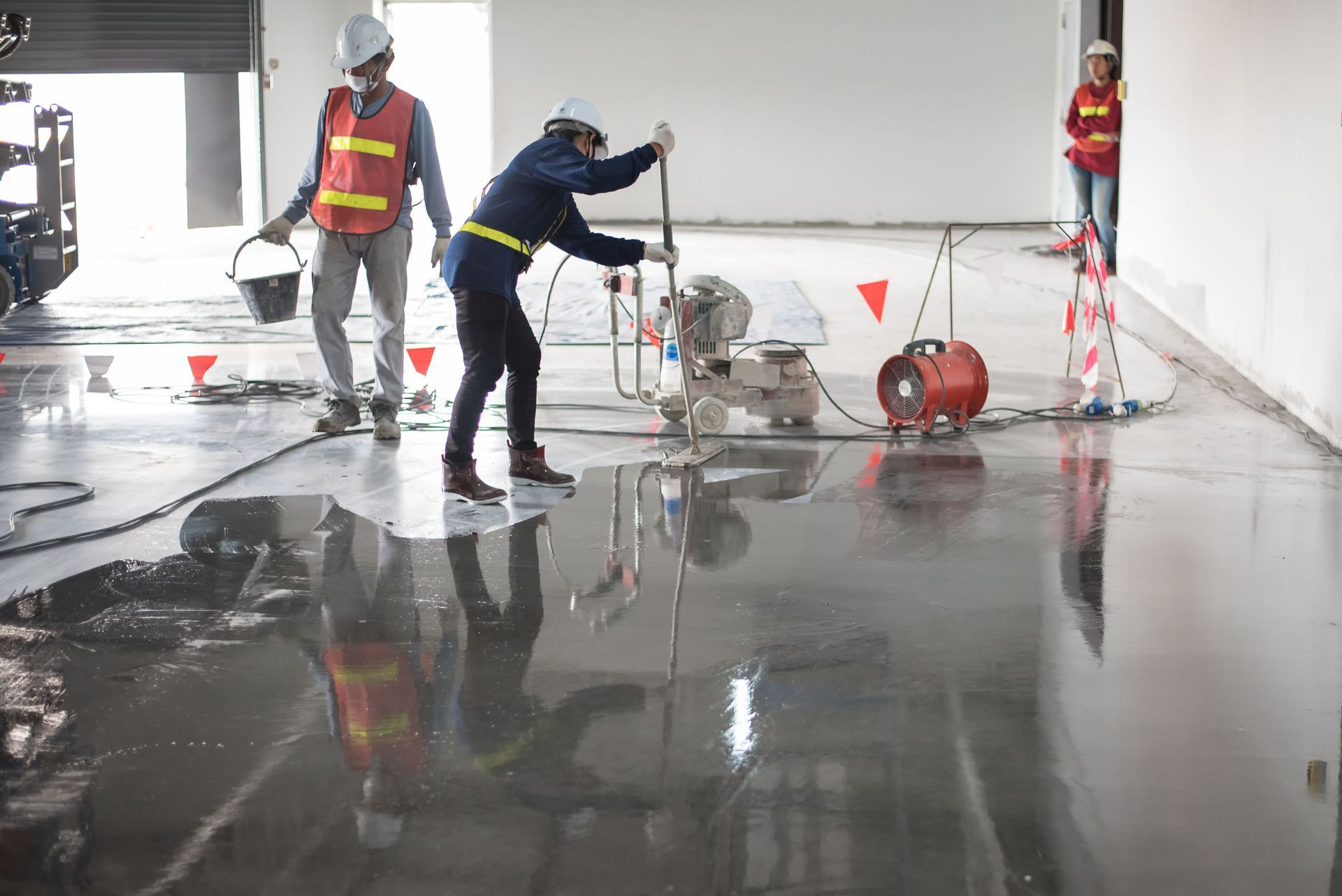
Mechanical diamond grinding can remove old coatings and contaminants while creating a surface profile for the new system to bond with. Industrial vacuuming then clears dust and debris from the prepared area. Where the concrete has cracks or other damage, repairs may be needed before priming and coating. Industrial epoxy floors rely on these preparatory steps as much as they rely on the selected epoxy.
Preparation can vary across a large facility. One section of the floor may be sound while another shows damage from a past use or a recurring traffic pattern. Evaluating those differences helps determine where repairs are needed before a uniform coating is applied. That work can affect how the finished surface looks and performs.
A Continuous Surface for Demanding Spaces
Epoxy can form a continuous surface over prepared concrete, without the grout lines associated with some other flooring types. Where dust, grime, or spills demand regular attention, fewer joints give debris fewer places to collect. The finish still matters: a texture chosen for grip, for example, will need to fit the facility's cleaning routine as well as its traffic.
Resistance to chemicals, stains, moisture, and abrasion can also be relevant in manufacturing and warehouse environments. The substances present and the frequency of equipment movement shape which properties deserve attention. Industrial epoxy floors can be selected around those defined exposures, giving the conversation about durability a concrete starting point rather than a general promise that a coating will withstand everything.
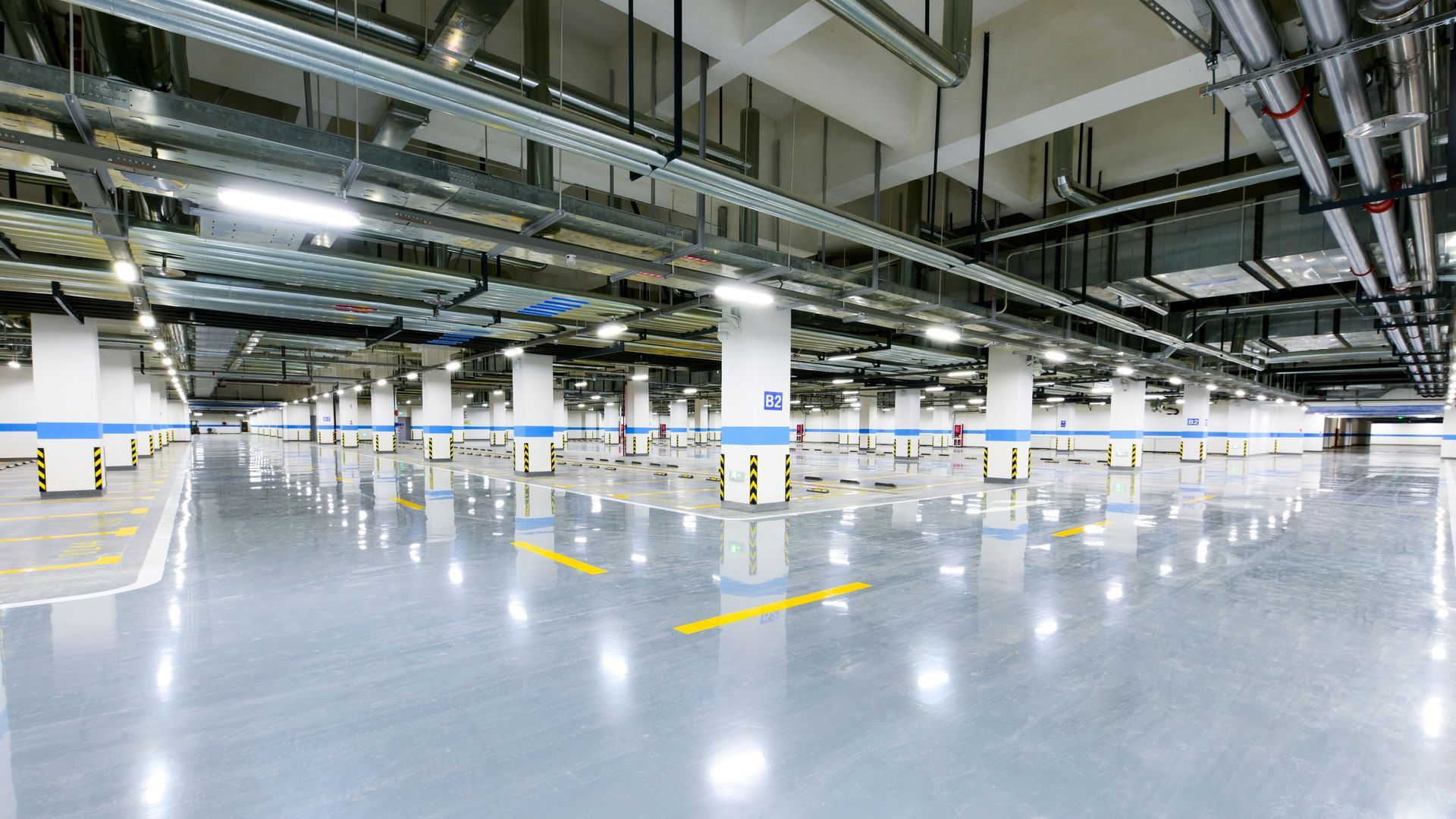
A continuous surface can still have different finishes where operations call for them. A glossy finish can reflect light in one area, while a work zone may need added traction. Considering both the intended use and the cleaning routine before choosing a finish makes that choice more useful to the people who will maintain the floor.
Safety Features and Visual Organization
Industrial spaces often contain areas with different purposes, and the floor can help make those distinctions visible. Color-coded zones can identify designated work or traffic areas when they follow the facility's actual layout. A change in color is most useful when its meaning is consistent and workers can recognize where one area ends and another begins.
Traction deserves similar attention. A very smooth surface may be appropriate in one setting, while another may call for additives or a topcoat chosen to provide more grip. Industrial epoxy floors can incorporate those options, but slip resistance depends on the selected finish and the conditions underfoot. Discussing both expected spills and cleaning methods helps put the choice in practical terms.
Floor markings and traction choices should make sense to the people using the space each day. If an aisle changes purpose or a particular area sees frequent spills, that information belongs in the discussion before colors and finishes are chosen. The result can then reflect the facility's routines instead of forcing those routines around the new surface.
Installation Planned Around Operations
An operating facility cannot always close an entire floor without disrupting work. Coordinating access to work areas, preparation, application, and curing therefore becomes part of the installation plan. Some projects may be scheduled during a weekend or another quieter period. The sequence should reflect both the selected coating system and the facility's needs, rather than rely on a universal promise about timing.
Curing deserves particular attention because a floor can look finished before it is ready for all traffic. Facility managers need clear guidance on when people, equipment, and vehicles may return to the coated area. A final inspection and walkthrough can address the completed surface and any questions about its use. Those steps help turn an installation schedule into a practical return-to-service plan.
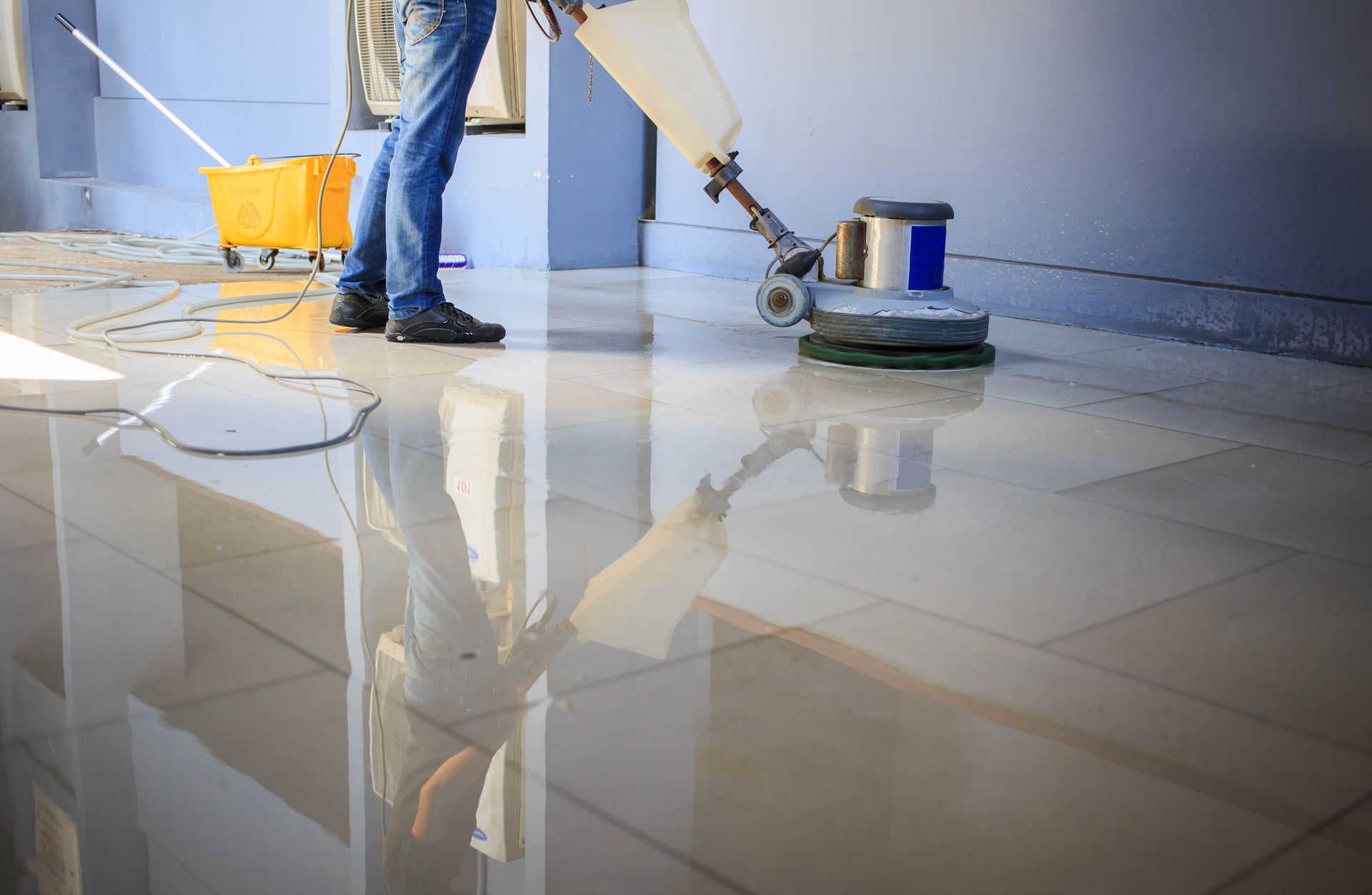
Once the space is active again, appropriate cleaning helps preserve the floor's appearance and function. The approach depends on its finish and on the substances encountered during ordinary operations. Those details belong in the handoff, so the people caring for the floor know what the installed system was designed to handle.
The character of an industrial epoxy floor comes from how its materials and finish respond to the work happening above the concrete. When those decisions start with the facility's actual conditions, the finished floor has a clearer purpose in daily operations. At BICS Inc., we assess concrete, prepare and repair surfaces, and install industrial epoxy coating systems suited to facility needs. We can discuss the demands on your floor and the coating options that fit the space.
Share On: